


Shipper | Blog 4 min. read
Supply chain bottlenecks: why they’re becoming harder to ignore
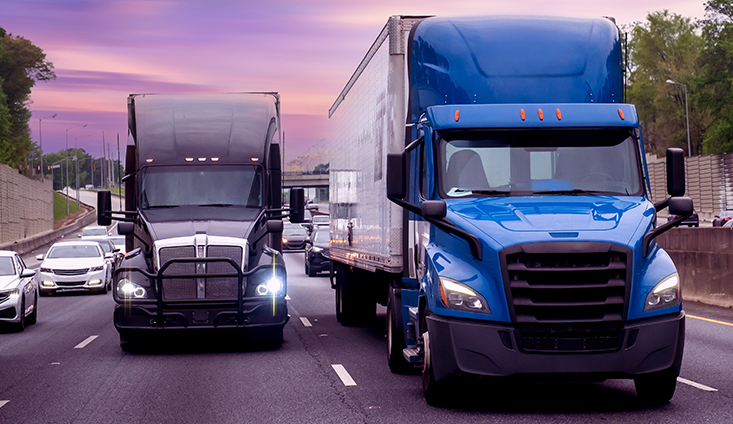
For shippers, steady flow is the goal. Freight moving in rhythm, costs staying predictable and customers getting what they need on time. But increasingly, that rhythm is being disrupted. Supply chain bottlenecks are popping up more often — and in more places — turning small delays into cascading slowdowns that put pressure on costs, service and performance.
Understanding why supply chain bottlenecks form, where they’re most likely to occur and how to recognize them early is a critical first step toward building a more resilient operation.
Key takeaways
- Supply chain bottlenecks are no longer one-off disruptions — they’re a recurring reality, making early detection and proactive response critical to maintaining flow.
- The most significant slowdowns stem from overlapping pressures, not isolated events, reinforcing the need to monitor patterns across the network.
- Control improves when bottlenecks are measured early and addressed collaboratively, enabling teams to resolve root causes before disruption spreads.
What is a supply chain bottleneck?
A supply chain bottleneck occurs when freight flow slows or stalls at a specific point in the network, restricting throughput and creating downstream delays. Unlike one‑off disruptions, bottlenecks typically develop when capacity, infrastructure or processes can’t keep pace with demand — whether that demand comes from market shifts, seasonal surges or unexpected change.
In today’s freight environment, bottlenecks are no longer treated as isolated events. The World Economic Forum has described supply chain disruption as a structural condition rather than a temporary shock, noting that today’s global trade networks are repeatedly exposed to overlapping sources of volatility such as congestion, labor availability and geopolitical fragmentation.
For shippers, that means freight bottlenecks aren’t something to wait out. They’re a recurring reality that must be understood and anticipated.
Common types and causes of modern supply chain bottlenecks
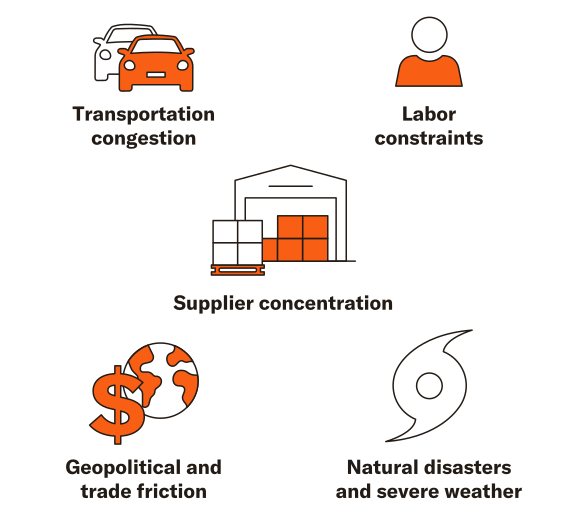
While bottlenecks show up in different ways, the most common types tend to cluster around a few pressure points:
- Transportation congestion, including highway chokepoints, port backups and rail terminal delays.
- Labor constraints that limit throughput at warehouses, yards and docks.
- Supplier concentration, where reliance on a small number of facilities or regions reduces flexibility.
- Geopolitical and trade friction that disrupts established routes and timelines.
- Natural disasters and severe weather, which increasingly disrupt freight flows by closing ports, slowing rail operations, restricting highway access and reducing labor availability.
The scale of the issue is significant. In a recent global survey by Arthur J. Gallagher & Co., 86% of companies reported experiencing a supply chain loss in the past year, ranging from operational disruption and missed deliveries to financial and reputational impact. The same research identified geopolitical instability, trade and tariff friction, rising transportation costs and concentrated supplier networks as leading drivers of those disruptions.
The takeaway is not that freight is failing, but that complexity has compounded. Bottlenecks often emerge when multiple stressors overlap, stretching networks that were designed for efficiency more than adaptability.
Identifying and measuring bottlenecks in daily operations
Supply chain bottlenecks can be measured. At a macro level, the U.S. Bureau of Transportation Statistics tracks trends such as truck speeds at major freight bottlenecks and rail terminal dwell time to monitor congestion across the national transportation network. Over time, these indicators show that slowdowns across truck and rail networks return again and again, signaling that congestion is now a persistent part of freight movement.
The same signals appear within individual shipper operations. Longer dwell times at docks. Missed or misaligned appointments. Freight waiting on equipment, labor or handoffs that don’t move as planned. Each may seem manageable on its own, but together they create a drag on network velocity.
According to Rich Chandler, Vice President of Operations at Schneider, the earliest warning signs of a bottleneck are rarely dramatic.
“Bottlenecks don’t usually appear overnight,” Chandler explains. “They develop through small executional frictions — long unload times, missed appointments, freight not being ready when drivers arrive. If those issues repeat at the same locations or on the same lanes, that’s when you know something deeper is forming.”
The real cost of bottlenecks
Left unaddressed, bottlenecks affect more than transit times. They quietly increase the total cost of moving freight.
- Delays consume driver hours, which directly impacts rates.
- Missed delivery windows slow time to market.
- Congestion increases handling and storage time, raising claims risk and compromising product integrity.
- Reactive decision making limits flexibility when conditions change again.
As Chandler points out, inefficiency compounds quickly.
“When freight gets backed up at a location — whether it’s congestion in the yard, limited dock space or poor appointment alignment — everything snowballs. The more time drivers waste there, the harder it becomes to keep freight moving where it needs to go.”
The longer bottlenecks persist, the harder they are to unwind.

Practical strategies for confronting bottlenecks
The goal isn’t to eliminate every disruption. In a freight landscape defined by constant change, that’s unrealistic. Instead, leading shippers focus on early detection, disciplined measurement and cross‑functional communication.
That starts with treating service metrics as an inspection tool, not a report card. One‑off issues are part of transportation. Repeatable patterns aren’t.
From there, progress depends on collaboration — within the shipper’s own organization and with its carriers.
“The most effective bottleneck prevention happens when shippers, carriers and internal teams are aligned from the start,” Chandler says. “That shared understanding makes it easier to identify friction, agree on what needs to change and keep the operation moving forward instead of reacting after service breaks.”
Addressing root causes may require changes to scheduling, yard flow, load setup or how information is shared. What matters is approaching bottlenecks as systemic challenges rather than isolated failures.
Over time, shippers that build this muscle gain more control. They don’t just react faster — they see issues forming sooner.
Looking ahead: moving beyond single mode thinking
As supply chain bottlenecks continue to reappear across the freight network, one lesson is becoming clear: relying on rigid, single mode strategies leaves little room to absorb disruption.
Flexibility matters. And for many shippers, that means rethinking how modes work together — not as separate silos, but as part of an integrated network designed to adapt as conditions change.
If freight bottlenecks are no longer the exception, the ability to navigate them confidently becomes a competitive advantage.
Build an adaptable supply chain
Explore how a more flexible approach can help shippers respond faster, maintain flow and stay ahead of disruption.
Related resources
Drive your business forward
Sign up to receive our industry leading newsletter with case studies and insights you can put to use for your business.