


Shipper | Blog 4 min. read
How weather disruptions impact supply chains and the strategies that help
By Rodney Cromwell, Vice President - Commercial, Enterprise Sales
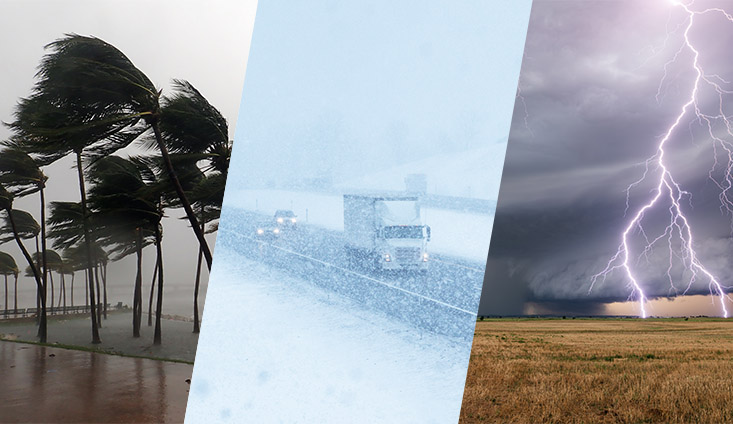
Severe weather puts transportation networks to the test, disrupting service, tightening capacity and increasing cost. Effective supply chain strategies for weather-event-related disruptions are no longer optional for shippers looking to maintain service levels, control costs and protect customer relationships.
Bad weather doesn’t just delay freight. It reduces capacity, slows production, bloats inventory and turns expedited shipping into an expensive necessity.
Understanding these risks and implementing proactive planning measures can help businesses minimize disruption and build greater resilience when conditions become unpredictable.
Key takeaways
- Weather disruptions can drive up transportation costs, delay freight and reduce available capacity.
- Effective supply chain strategies for weather event-related disruptions can help maintain service and control costs.
- Multimodal transportation, visibility tools and contingency planning can strengthen supply chain resilience.
Common weather events that disrupt supply chains
Every season presents transportation challenges, but winter weather often creates some of the most significant disruptions across North America.
Supply chains can be affected by a wide range of weather events, like:
- Hurricanes
- Flooding
- Tornadoes
- Wildfires
- Severe thunderstorms
- Extreme heat
- Winter storms
These events can damage infrastructure, close critical transportation corridors, disrupt production facilities and create significant delays across supply chains.
Weather-related disruptions often occur across large geographic areas simultaneously, creating widespread effects on transportation networks and freight availability.
As an example, winter weather can extend transit times as drivers take additional safety precautions, including more comprehensive pre-trip and post-trip inspections, reduced travel speeds and route adjustments around hazardous conditions. Snow, ice and extreme cold can also impact equipment performance and availability, requiring additional maintenance and increasing the risk of delays.
As carriers reposition equipment, adjust capacity and reroute freight around affected areas, these disruptions can ripple across the supply chain, impacting freight movement even in regions not directly affected by the weather.
As supply chains become increasingly interconnected, a single weather event can trigger downstream impacts for days or even weeks. Whether it's a hurricane shutting down Gulf Coast operations, a wildfire affecting western transportation routes or a winter storm reducing trucking capacity across multiple states, weather-related disruptions can create ripple effects throughout the supply chain.
The hidden cost of weather disruptions in the supply chain
When most organizations think about weather disruptions, they think about delays.
And for good reason. The U.S. Department of Transportation's Federal Highway Administration (FHWA) estimates that weather-related delays cost the trucking industry between $8 billion and $9 billion annually.
However, delayed freight is only one piece of the equation.
Weather-driven disruptions can increase supply chain costs in several ways:
Higher transportation rates
When severe weather reduces available capacity, demand for trucks often exceeds supply. Shippers may face higher spot market rates, premium service charges or additional costs to secure capacity during critical periods.
Increased inventory costs
Unpredictable transit times often force organizations to carry additional safety stock. While this can help maintain service levels, it also increases inventory carrying costs and ties up working capital.
Production interruptions
Delayed inbound materials can slow or halt production, creating costly downtime and making it harder to meet customer commitments.
Expedited freight expenses
When weather-related delays threaten service requirements, companies may rely on expedited transportation options to recover lost time. These emergency measures can significantly increase overall transportation spend.
Customer service impacts
Missed deliveries can affect customer satisfaction, create contractual penalties and damage long-term relationships. In highly competitive industries, the cost of lost trust can exceed the immediate transportation expense.
For supply chain leaders, weather events aren't simply operational challenges. They're financial risks that require strategic planning and active management.
How weather disruptions affect transportation capacity
One of the largest consequences of severe weather is its impact on transportation capacity.
When roads become hazardous or infrastructure is disrupted, carriers must make appropriate adjustments. Equipment may be delayed, drivers may have fewer available hours, and freight networks can become congested as shipments are rerouted around impacted areas.
Capacity challenges can become particularly severe when:
- Multiple regions experience weather events simultaneously
- Peak seasonal shipping periods overlap with winter storms
- Recovery efforts create surges in freight demand after conditions improve
- Temperature-sensitive freight requires specialized equipment
As capacity tightens, competition for available equipment increases, making transportation planning more difficult and often more expensive.
This is where having a strong and reliable relationship with carriers becomes especially important. Carriers with broad networks, multimodal capabilities and weather contingency plans are better positioned to maintain service and help customers navigate disruptions.
Strategies for mitigating weather-related supply chain risk
While organizations can't control the weather, they can take steps to reduce their exposure to weather-related disruptions.
Diversify transportation modes
Relying on a single transportation mode can increase vulnerability when weather conditions affect specific regions or networks.
A more flexible multimodal strategy may include a mix of truckload, intermodal and specialized transportation solutions like liquid bulk and refrigerated transportation. Access to multiple modes can provide alternative options when disruptions occur and help maintain freight movement during challenging conditions.
Diversification also allows shippers to balance service requirements, cost considerations and network resiliency more effectively.
Prepare for temperature-sensitive freight
Extreme heat and cold create unique challenges for products that require temperature control.
For refrigerated freight like food and beverage shipments, proper reefer settings and continuous monitoring are essential for protecting temperature-sensitive cargo quality during extreme conditions. Liquid bulk shipments or chemical freight with specific temperature thresholds, moving in colder weather may require heat-in-transit capabilities to prevent freezing and maintain product integrity.
Developing seasonal transportation plans and working with experienced providers can help ensure products remain protected throughout the journey.
Improve supply chain visibility
Proactive communication and real-time shipment visibility can help organizations identify potential issues before they become larger problems.
Weather monitoring, predictive analytics and transportation management systems can provide valuable weather insights for supply chain risk management, allowing teams to make informed decisions and adjust plans as conditions change.
Build contingency plans before storms arrive
The most effective response to weather disruptions begins long before the forecast turns severe.
Strong contingency plans establish escalation procedures, alternative routing options, backup capacity sources and communication protocols. These preparations can help reduce disruption costs and maintain customer service during challenging conditions.
A responsible approach to risk management focuses not only on responding to disruptions but also on preparing for them.
Turning weather risk into a competitive advantage
Every shipper faces some level of supply chain weather risk. The difference often comes down to preparation.
Organizations that develop proactive weather event disruptions supply chain strategies are better positioned to protect service levels, control transportation costs and maintain operational continuity when conditions become difficult.
The most successful supply chains don't eliminate uncertainty. They build resilience into their operations, creating the flexibility and control needed to perform through changing conditions.
With the right planning, transportation expertise and network strategy, weather disruptions can become more manageable and less costly.

Ready to strengthen your supply chain strategy?
Download this guide for practical ways to improve efficiency and control costs.

About the author
Rodney Cromwell, Vice President of Commercial and Enterprise Sales, leads sales strategy, operational excellence and customer experience. With nearly two decades at Schneider, he shares his expertise to help shippers navigate challenges and unlock more innovative, efficient solutions.
Related resources
Drive your business forward
Sign up to receive our industry leading newsletter with case studies and insights you can put to use for your business.


