


Shipper | Blog 5 min. read
AI in supply chains: turning data into better decisions
By Rodney Cromwell, Vice President - Commercial, Enterprise Sales
Organizations are exploring artificial intelligence (AI) in supply chain management as they look for ways to make faster, more informed decisions in increasingly complex operating environments. While the technology continues to evolve, I believe its greatest value comes from helping teams uncover meaningful insights, improve visibility and respond more effectively to change.
In this article, I'll share where I see AI creating the most practical value for shippers and the considerations organizations should keep in mind as they evaluate adoption.
Key takeaways
- AI helps supply chain teams turn data overload into actionable insights.
- The biggest value of AI is enabling faster, more confident decision-making.
- Demand forecasting, transportation planning and visibility are leading AI use cases.
- Successful AI adoption starts with solving a specific business challenge.
- Human expertise and high-quality data remain critical to AI success.
The real challenge isn't data. It's clarity.
Over the past few years, I've noticed something interesting in conversations with shippers. Most aren't struggling because they lack data. They're struggling because they have too much of it.
A transportation team can see shipment updates, weather forecasts, inventory levels, market trends and customer demand signals all at once. The challenge isn't getting information. The challenge is determining which information matters most and what action to take next.
That's why I believe the most practical use of AI in supply chain management isn't automation. It's helping supply chain professionals identify meaningful patterns faster and make more confident decisions.
What is AI in supply chain management?
When people ask me about artificial intelligence in supply chain management, I think the real question isn't "What is AI?" It's "How can we make better decisions with the data we already have?"
Most supply chains generate more information than teams can realistically analyze on their own. AI can help identify patterns, surface insights and evaluate data in real time, giving organizations a clearer picture of what's happening across their network.
The technology includes capabilities like machine learning, predictive analytics, intelligent automation and generative AI. But from my perspective, the real value is simple: it can help shippers improve decision-making, reduce inefficiencies and build more flexible supply chains.
How shippers are using AI today
When I speak with supply chain leaders, very few are asking whether AI matters anymore. The conversation has shifted to where it can deliver measurable value.
In most cases, I see three areas generating the most interest:
Demand forecasting
Forecasting is one of the areas where shippers see the most immediate potential from AI. Even small improvements in forecast accuracy can have a meaningful impact on inventory levels, service performance and overall efficiency.
AI can analyze historical sales data, seasonal trends, market conditions and other factors simultaneously, helping organizations identify patterns that might otherwise go unnoticed.
Rather than relying on a limited set of inputs, shippers can develop a more complete view of demand and make planning decisions with greater confidence.
Transportation planning and optimization
Transportation networks generate a tremendous amount of data every day. The challenge isn't collecting that information; it's turning it into actionable insights.
I've seen growing interest in how AI can help shippers evaluate routing options, optimize load planning and identify potential disruptions before they affect service.
When teams have better visibility into what's happening across their network, they can make faster decisions and respond more effectively as conditions change.
Supply chain visibility
One of the most common concerns I hear from supply chain leaders is visibility. As networks become more complex, understanding what's happening across suppliers, inventory and transportation operations becomes increasingly difficult.
AI can help bring greater clarity to that complexity by identifying exceptions and surfacing emerging issues in real time.
For shippers, that means spending less time searching for information and more time proactively addressing challenges before they become larger problems.
Benefits of AI in supply chains
Organizations are adopting AI for a simple reason: they believe it can help them operate more effectively.
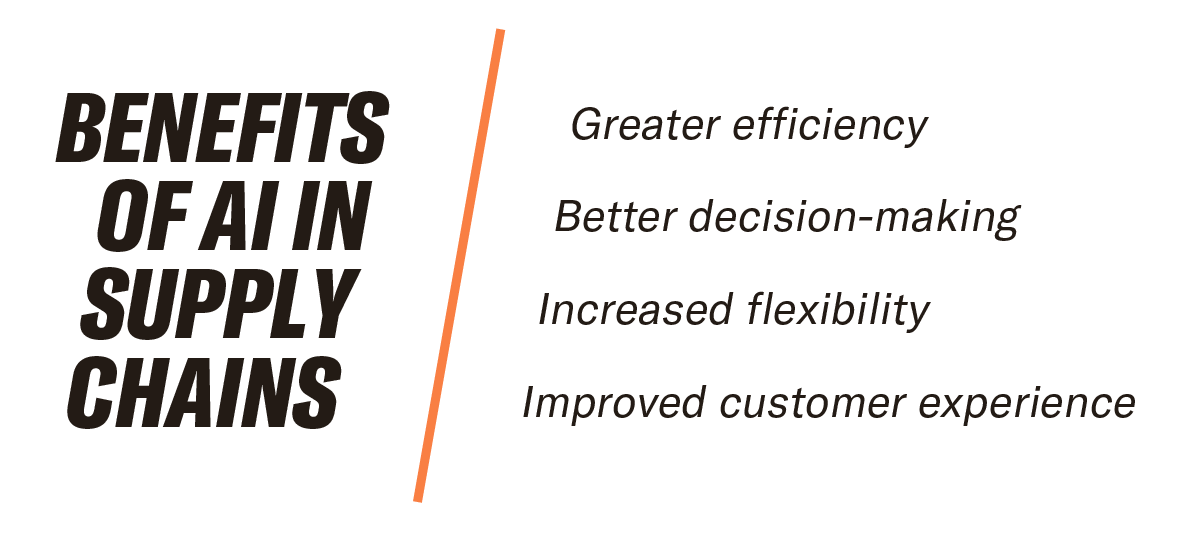
While every organization has different goals, a few potential benefits consistently stand out:
- Greater efficiency: AI can help streamline routine processes and surface relevant information more quickly, allowing teams to focus on higher-value decisions and operational priorities.
- Better decision-making: One of the biggest advantages of AI is its ability to turn large volumes of data into actionable insights. When teams have clearer information, they can make decisions with greater speed and confidence.
- Increased flexibility: Supply chains are constantly adapting to changing demand, market conditions and unexpected disruptions. AI can help organizations identify changes earlier and respond more effectively.
- Improved customer experience: Better visibility and planning often lead to more reliable service, helping organizations meet customer expectations more consistently.
Potential challenges and considerations for AI
While AI has the potential to create meaningful value, I've found that success often depends less on the technology itself and more on how organizations approach implementation.
Data quality is critical
One of the first questions I would ask is whether the underlying data is reliable.
AI is only as effective as the information it is working with. If data is incomplete, inconsistent or outdated, organizations may struggle to achieve the results they expect.
Before investing in advanced AI capabilities, it's important to have a strong foundation of accurate, accessible data.
Technology alone is not the answer
I've seen organizations become excited about AI because of its potential, but the most successful initiatives typically start with a business challenge, not a technology solution.
AI can help generate insights, identify patterns and support decision-making, but it works best when it's aligned with clear objectives and operational needs.
In my experience, organizations see the greatest value when they focus on solving a specific problem, whether that's improving forecasting, increasing visibility or enhancing supply chain efficiency, rather than implementing AI simply because it's the latest trend.
Human expertise still matters
Supply chains are filled with trade-offs that require experience, judgment and context.
AI can support decision-making, but people remain essential to interpreting insights, evaluating options and determining the best path forward.
The most effective AI strategies combine data-driven insights with the expertise of supply chain professionals, enabling organizations to make more informed decisions and respond more effectively to changing conditions.
How shippers are thinking about the future of AI
I believe we're still in the early stages of understanding what's possible with AI in supply chain and logistics.
The opportunity isn't just making individual tasks more efficient. It's helping organizations understand how decisions in one area of the supply chain affect another.
Imagine being able to evaluate the downstream impact of a routing change, a demand spike or a sourcing disruption before it creates larger issues across the network. That's the type of connected decision-making many organizations are working toward.
While the technology will continue to evolve, the goal remains the same: helping supply chains become more flexible, efficient and resilient.
What can shippers do next?
For organizations exploring how to implement AI in supply chain management, I recommend starting with a business challenge rather than a technology solution.
Look for areas where better visibility, stronger forecasting or faster decision-making could improve performance.
AI is not a cure-all for every supply chain challenge. However, when applied thoughtfully, it can help organizations improve efficiency, adapt to changing conditions and make more informed decisions.
In my experience, the companies seeing the greatest value aren't chasing AI because it's trendy. They're using it strategically to solve real operational problems and create more flexible supply chains.

Want a practical perspective on AI in supply chains?
Watch the full webinar to hear Rodney Cromwell discuss current AI trends and AI adoption.

About the author
Rodney Cromwell, Vice President of Commercial and Enterprise Sales, leads sales strategy, operational excellence and customer experience. With nearly two decades at Schneider, he shares his expertise to help shippers navigate challenges and unlock more innovative, efficient solutions.
Related resources
Drive your business forward
Sign up to receive our industry leading newsletter with case studies and insights you can put to use for your business.