


Shipper | Blog 5 min. read
Transportation costs: why freight rates tell only part of the story
By Rodney Cromwell, Vice President - Commercial, Enterprise Sales
When disruptions occur and budgets come under pressure, it's natural to focus on freight rates.
After all, rates are easy to benchmark. They provide a straightforward way to compare providers and measure transportation spend. But they only tell part of the story.
What many organizations discover is that some of their most significant transportation-related costs aren't found on an invoice. They show up as excess inventory, service disruptions, operational inefficiencies and the resources required to manage complexity across the supply chain.
Key takeaways
- Transportation costs extend far beyond freight rates and include inventory, service, labor, and operational impacts.
- Hidden costs from delays, disruptions, and complexity can outweigh savings from lower transportation rates.
- Leading shippers evaluate transportation decisions through the lens of cost, service and efficiency rather than price alone.
- Long-term transportation savings can come from visibility, network optimization, and data-driven decision-making.
Why transportation rates are rising
At the same time, the transportation environment itself continues to change. According to the American Transportation Research Insititute's (ATRI) 2026 Analysis of the Operational Costs of Trucking, the average cost to operate a truck increased 3.4% in 2025 to a record $2.336 per mile, while costs rose across all major operating categories, including maintenance, driver benefits and insurance.
These increases underscore how interconnected transportation costs have become.
That's why transportation cost management is no longer just about negotiating rates. It's about understanding how transportation decisions, both proactive and reactive, impact total supply chain performance.
Transportation costs in logistics go beyond freight spend
Many companies measure transportation performance by tracking freight rates, fuel surcharges and accessorial charges. While those costs are important, and generally generate the most noise, they represent only one piece of the total transportation picture.
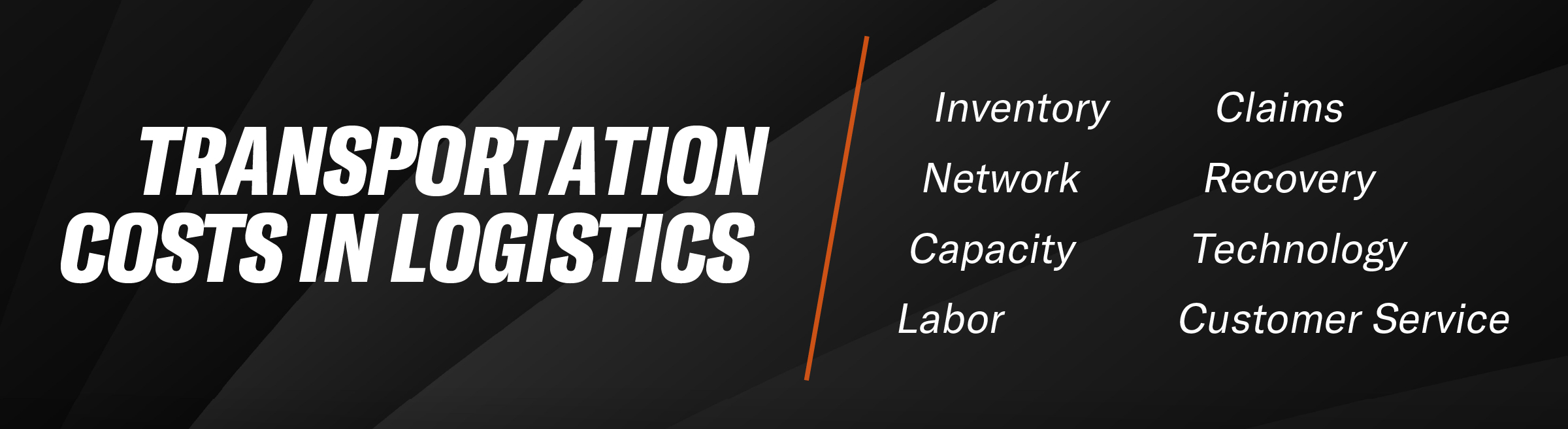
Transportation costs in logistics can also include:
- Inventory carrying costs
- Administrative labor
- Claims management
- Service recovery efforts
- Network inefficiencies
- Capacity disruptions
- Technology investments
- Customer service impacts
These costs may not appear on a carrier invoice, but they often have a significant effect on overall supply chain performance.
Consider maintenance as one example. Industry research consistently shows that repair and maintenance expenses remain among the fastest-growing operating costs for trucking companies. Those costs don't exist in isolation. They influence equipment availability, network capacity and ultimately the performance shippers depend on.
Looking through a broader lens helps organizations better see the connection between freight decisions and overall supply chain performance. When transportation strategies create delays, increase variability or introduce inefficiencies elsewhere in the network, the resulting costs often extend far beyond the original freight spend.
That's why leading supply chain organizations have shifted away from evaluating rate alone to now factoring in total cost and more dynamic benchmarking in their overall analysis.
What is often the largest component of logistics costs?
For many organizations, transportation remains one of the largest components of overall logistics costs.
The exact percentage varies by industry and supply chain model but often represents a substantial share of logistics spending because nearly every movement of goods creates cost, risk and service implications.
Transportation influences:
- Inventory levels
- Customer service performance
- Facility operations
- Labor planning
- Working capital requirements
- Supply chain flexibility
As a result, decisions often have ripple effects throughout the broader supply chain.
This is why transportation cost management should be viewed as a business strategy rather than simply a procurement exercise.
The financial impact of hidden transportation costs
Some of the most expensive issues in supply chains don't originate with rates at all.
Instead, they emerge through operational inefficiencies that, left unchecked, can compound over time.
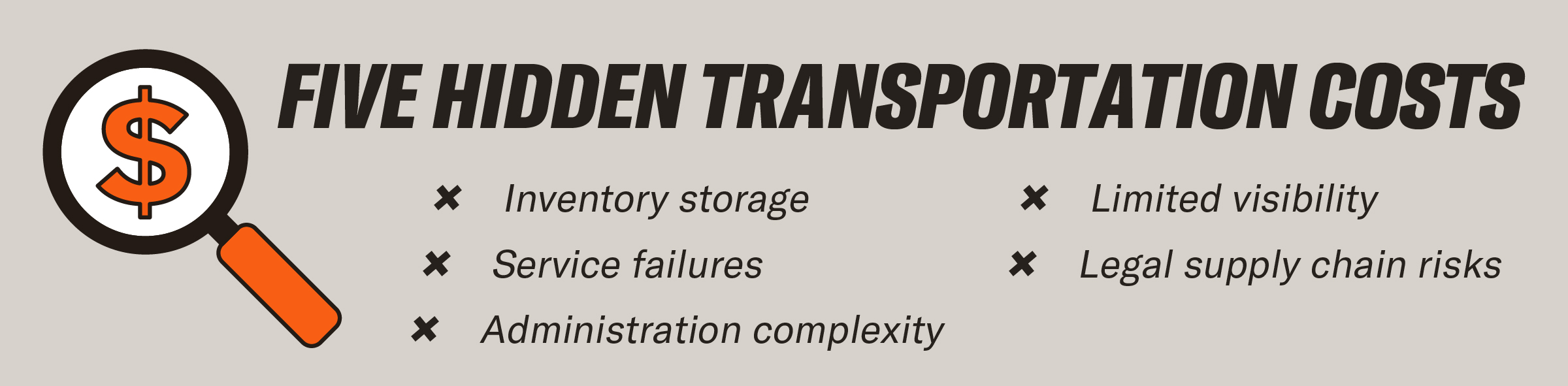
Inventory costs
When performance becomes inconsistent, businesses often compensate by carrying additional inventory.
While increased safety stock may reduce service risk, it also ties up working capital and increases storage expenses.
Service failures
Missed deliveries, appointment delays and transportation disruptions can impact production schedules, customer commitments and overall business performance.
In many situations, the cost of recovering from a service issue exceeds the savings generated by a lower transportation rate.
Administrative complexity
Managing multiple carriers, resolving shipment exceptions and coordinating transportation activities require time and resources.
As networks become more complex, these administrative expenses can grow quickly.
Limited visibility
Without accurate transportation data and reporting, organizations may struggle to identify inefficiencies or make informed decisions about network performance.
Supply chain visibility is often one of the most valuable investments companies can make when seeking long-term transportation savings.
Legal supply chain risks
The Montgomery ruling has heightened awareness of shipper liability and reinforced the importance of carrier vetting and compliance.
As a result, transportation decisions can have financial implications that reach well beyond rates and invoices.
How do you calculate transportation cost in logistics?
This is one of the most common questions supply chain professionals ask.
The challenge is that there isn't a single number that tells the whole story.
A shipment may have the lowest rate on paper, but if it requires additional inventory, creates delivery variability or increases operational complexity, its true cost can be much higher.
That's why leading shippers evaluate transportation costs in the context of three factors:
- Cost: What are we paying to move freight?
- Service: Are we meeting customer and business requirements?
- Efficiency: How does this transportation decision affect the rest of the supply chain?
When companies balance all three, they gain a clearer understanding of what transportation actually costs the business and where meaningful improvement opportunities exist.
A better approach to transportation cost management
Successful transportation cost management isn't about finding the cheapest carrier or negotiating the lowest rate.
In fact, industry cost studies have shown that trucking operating costs have remained above historical norms even during softer freight markets. That's a reminder that transportation decisions shouldn't be based solely on market cycles. Sustainable savings typically come from network efficiency, visibility and execution.
Leading shippers often focus on:
- Network optimization: Evaluating transportation flows to reduce unnecessary miles, improve efficiency and support service goals.
- Data-driven decisions: Using transportation data to identify cost drivers, measure performance and uncover improvement opportunities.
- Strategic carrier relationships: Building relationships that support reliability, capacity access and long-term operational efficiency.
- Supply chain visibility: Improving insight into transportation performance to proactively manage disruptions and reduce costly surprises.
These strategies help organizations create a more balanced approach that considers both cost and service outcomes.
Looking beyond the freight invoice
Freight rates will always be an important part of transportation planning. But rates alone don't tell the full story. The most effective transportation strategies consider the broader network impacts that influence logistics costs over time.
For shippers looking to take a more strategic approach, start by asking three questions:
- Do we understand our total transportation costs, not just our freight spend?
- Where are service issues, delays or inefficiencies creating costs elsewhere in the supply chain?
- Are our transportation decisions supporting both cost goals and customer expectations?
Answering those questions often reveals opportunities that a rate comparison alone can miss.
As supply chains continue to evolve, transportation cost management will become less about securing the lowest rate and more about making informed decisions that balance cost, service and reliability. Organizations that take a total-cost view are better positioned to uncover efficiencies, manage disruption and build a supply chain that performs consistently in any market environment.
The bottom line: Don't just measure what you're paying to move freight. Measure the business impact of how your freight moves, that's where the biggest opportunities for improvement are often found.

Watch the full webinar
Get deeper insights into transportation costs, supply chain trends and practical ways to improve logistics performance.

About the author
Rodney Cromwell, Vice President of Commercial and Enterprise Sales, leads sales strategy, operational excellence and customer experience. With nearly two decades at Schneider, he shares his expertise to help shippers navigate challenges and unlock more innovative, efficient solutions.
Related resources
Drive your business forward
Sign up to receive our industry leading newsletter with case studies and insights you can put to use for your business.


