


Shipper | Case study 5 min. read
Supply chain communication: maintaining performance through disruption

Executive summary
A large shipper experienced a critical systems disruption that limited visibility across its transportation network and affected its ability to manage freight through normal processes. With shipments already in motion and additional freight continuing to enter the network, the disruption created immediate pressure across the supply chain.
Schneider identified early signs that normal freight patterns had changed, engaged the shipper quickly and mobilized support to help maintain continuity. As the situation evolved, Schneider shifted from technology-enabled execution to a communication-led operating model, using direct coordination, manual processes and flexible network support to help the shipper regain control.
Through consistent communication, expanded support and operational flexibility, Schneider helped the shipper work through a significant backlog while continuing to move critical freight. The response helped reduce disruption, maintain service continuity and reinforce the value of a transportation provider that can adapt quickly when conditions change.
Key takeaways
- When normal visibility is disrupted, clear communication can create the structure needed to restore alignment and keep freight moving.
- Fast response and close coordination help shippers recover from disruption while continuing to support active demand.
- Flexible capacity, strong relationships and consistent communication help protect service continuity across complex supply chains.
Background
A high-volume transportation network
The shipper operates a complex, high-volume transportation network that supports multiple facilities, lanes and delivery requirements. Moving freight consistently across this type of network requires visibility, coordination and the ability to adjust quickly when disruptions occur.
Schneider supports the shipper through a flexible mix of Intermodal, Truckload, Dedicated and Brokerage service offerings, helping provide the capacity, communication and operational support needed to manage changing freight demands. This multimodal approach gives the shipper options when conditions shift and supports more consistent execution across the network.
A relationship built on communication and trust
Before the disruption, Schneider and the shipper had established a strong operating rhythm built around consistent communication, shared expectations and coordinated execution. That foundation became especially important when the shipper’s normal systems and workflows were suddenly interrupted.
Schneider’s ability to deliver flexible multimodal solutions, combined with consistent communication and operational visibility, aligned directly with the shipper’s need for scale, control and reliability.
Challenge
A sudden loss of visibility and supply chain communication
Without warning, the shipper experienced a systems disruption that limited its ability to manage freight through standard transportation workflows. Normal tools used to tender, assign and track shipments were no longer available, creating immediate uncertainty across the network.
At the same time, freight still needed to move. Existing shipments required attention, new demand continued to build and teams needed a way to coordinate decisions without the visibility they typically relied on.
Impact to operations as supply chain communications break down
This disruption created immediate operational risk across the supply chain:
- No ability to communicate shipment details to carriers
- No visibility into freight already in transit
- Growing backlog alongside ongoing daily demand
- Increased risk of missed appointments, delayed deliveries and service interruptions
Left unresolved, these challenges could have created broader disruption across the shipper’s network. The core issue was not only the system outage itself — it was the communication gap the outage created.
Solution
Proactive communication identifies the disruption
The first sign that something was wrong did not come from a standard system alert. It came from Schneider.
When freight patterns began to shift and expected activity no longer aligned with normal volume trends, Schneider reached out to the shipper to flag the issue. That proactive communication helped confirm the disruption and created a starting point for the response.
A communication-led operating model restored alignment
Once the disruption was confirmed, Schneider quickly shifted from a system-enabled environment to one driven by direct communication and manual coordination. Associates worked closely with the shipper’s teams to understand immediate needs, prioritize freight and establish a path forward.
Without normal system visibility, communication became the operating structure. Regular updates, shared shipment information and coordinated decision making helped replace automated workflows with the alignment needed to keep freight moving.
Collaboration drives coordination across the network
Schneider expanded its role beyond execution to help support broader coordination. Teams worked across internal stakeholders, carrier partners and delivery points to align priorities, identify available capacity and address constraints as conditions changed.
This approach helped the shipper make more informed decisions in real time. Rather than focusing only on individual shipments, Schneider helped support the broader network response — providing guidance, capacity options and consistent communication throughout the recovery.
Flexible capacity helped keep freight moving
At the same time, Schneider leaned into its flexible network to help the shipper respond to changing needs. Capacity was adjusted across service offerings to support recovery efforts, giving the shipper more options as freight priorities shifted.
That flexibility helped the shipper continue moving critical freight while working through the disruption. It also gave teams the ability to respond to changing conditions without relying on a single mode, process or path forward.
Extending communication across the supply chain ecosystem
As the disruption continued, communication remained essential across the broader supply chain ecosystem. Schneider helped coordinate updates, confirm delivery details and manage expectations with key stakeholders connected to the freight.
Each update helped restore visibility. Each conversation helped reduce uncertainty. And each decision helped move the network closer to stability.
Through the entire response, communication was not a supporting function — it became the system that allowed the supply chain to keep operating.
Implementation
Phase one: Immediate response
Schneider mobilized quickly after identifying irregular freight activity and confirming the disruption with the shipper. Teams worked alongside the shipper to assess the situation, understand immediate priorities and determine how to keep freight moving without normal system support.
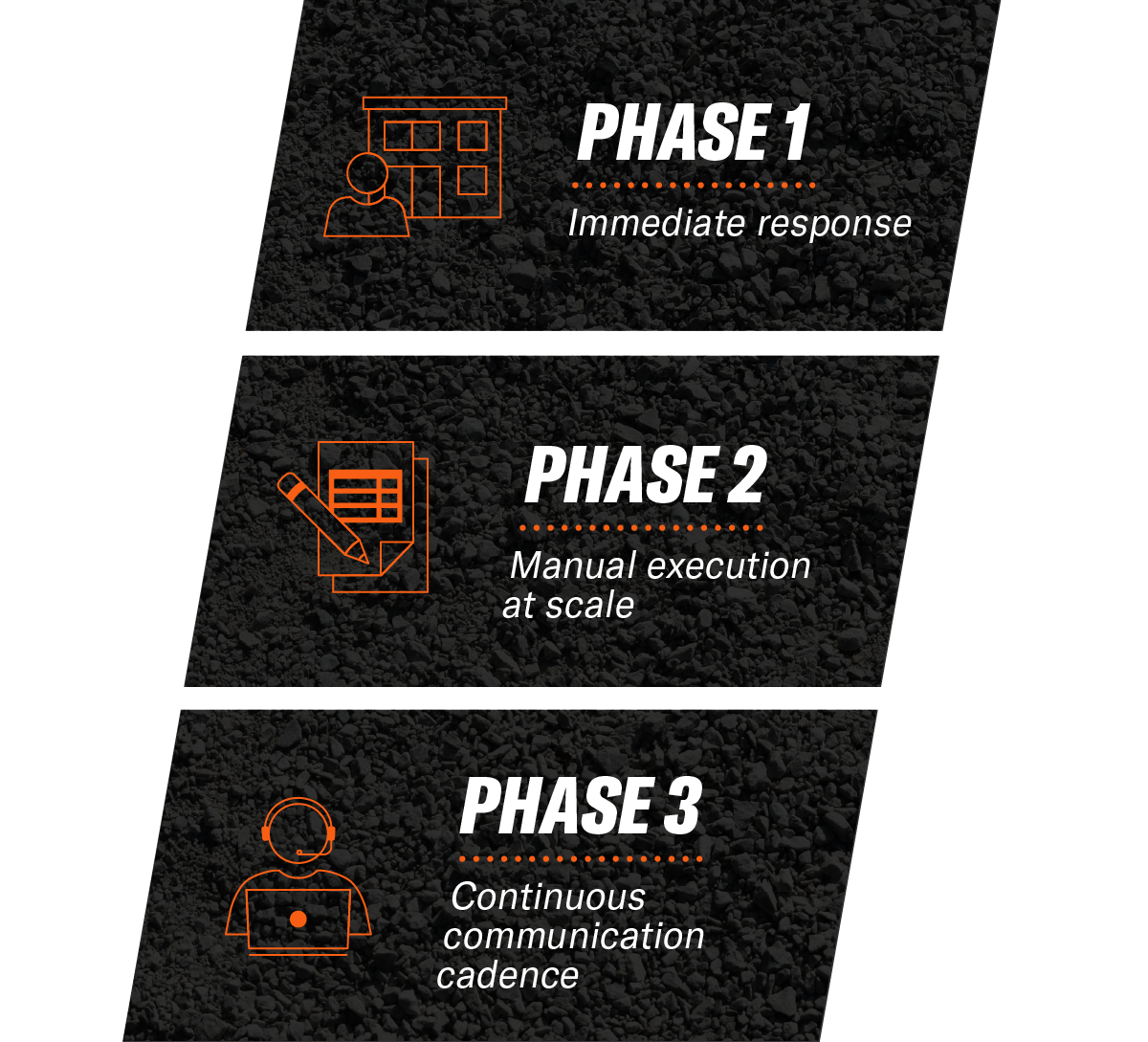
Phase two: Manual execution at scale
With standard workflows disrupted, Schneider and the shipper transitioned to manual processes. Shipment information was shared through alternate methods, reviewed by Schneider teams and used to support load planning and execution.
As demand continued, Schneider expanded internal support to help manage manual load creation, freight coordination and communication across a large volume of shipments.
Phase three: Continuous communication cadence
This cadence ensured alignment and enabled rapid decision making as conditions changed.
Throughout the recovery, Schneider maintained a structured communication rhythm that included:
- Frequent updates with shipper leadership and operational teams
- Ongoing visibility into shipment status and available capacity
- Regular coordination with carrier partners and delivery stakeholders
- Rapid issue resolution as needs changed
This cadence helped maintain alignment, support faster decisions and reduce the risk of additional disruption.
Results
Maintained supply chain continuity
Despite the loss of normal system visibility, the shipper continued moving freight through a period of significant disruption. Schneider’s communication-led approach helped the shipper work through a large backlog while continuing to support active freight needs.
Prevented downstream impact
By coordinating closely across the network, Schneider helped reduce the risk of missed deliveries and broader service interruptions. The shipper was able to maintain greater continuity across key lanes and delivery requirements.
Expanded support through flexible capacity
Schneider scaled its support during the recovery, adjusting resources and capacity to meet changing freight needs. This flexibility helped the shipper keep freight moving while navigating uncertainty.
Strengthened trust and long-term growth
Following the disruption, the shipper continued to rely on Schneider as a trusted transportation provider. The response demonstrated Schneider’s ability to communicate clearly, adapt quickly and support complex supply chain needs during critical moments.
Communication drives supply chain performance
This case demonstrates that effective communication in supply chain management is not a supporting function — it is the foundation of performance. Through proactive outreach, continuous visibility and collaborative problem-solving, Schneider helped the shipper:
- Maintain greater control during uncertainty
- Restore alignment across a disrupted network
- Keep freight moving without normal system visibility
- Protect service levels
- Build confidence in the path forward
In a constantly changing freight environment, shippers need transportation providers that can do more than move loads. They need providers that can communicate clearly, adapt quickly and bring flexible solutions forward when the unexpected happens.
Boost efficiency with multimodal transportation
Explore how Schneider’s flexible, multimodal service offerings and approach to communication in supply chain management can help you maintain control, reduce disruption and strengthen visibility across your supply chain.
Related resources
Drive your business forward
Sign up to receive our industry leading newsletter with case studies and insights you can put to use for your business.